
-

What Really Happened to Pro-Footballer Turned Army Ranger Pat Tillman?
Dates
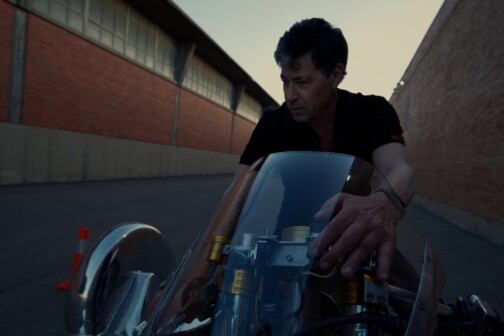
Opens Sep 3In 2002, NFL player Pat Tillman left his career in football to enlist in the United States army. He immediately became a symbol of the feelings of patriotism and national devotion that swept the country after September 11. Less than two years later, Tillman was killed in Afghanistan by friendly fire, creating panic for the brass of the U.S. army. How exactly was Tillman killed? What will happen when the public finds out? Will Tillman’s death damage the war effort?
-
Architecture Scholarship Set Up in Honor of Late-Critic David Dillon
The Dallas Architecture Forum and the Dallas Chapter of the American Institute of Architects announced today that they have established the “David Dillon Memorial Scholarship” in honor of the long time architecture critic for the Dallas Morning News who passed away in June. The scholarship, which will be administrated by the Dallas Center for Architecture Foundation, will awarded each year to a graduate student at the University of Texas at Arlington. A full release, including a biography of Dillon, is after the jump.
-

Why The Nasher’s New Exhibition Needs to Be Seen (And Heard)
Last night the Nasher Sculpture Center opened its doors to patrons, local art folk, and a few of us writer hacks to celebrate the opening of their new James Magee exhibit. We will have a formal review of the show soon, but the initial impression of not a few people gathered at the museum was that it is a show of some significance. Part of that stems from the fact that the work of James Magee is not very widely known, and the Nasher’s exhibition throws the weight of the museum’s critical judgment behind the artist. Part of it stems from the fact that the work itself is quite remarkable, impressive visually and physically, and also for the way it communicates the spirit of the artist’s life. Magee’s life is something of a constructed work. He has been everything from a lawyer to a vagabond, also creating artist personalities as pseudonyms under which he creates art of vastly different styles. Likewise his work consists of composite elements, juxtaposing contradictory materials and using “titles” that are lengthy poems or meditative reflections and meant to be heard while you look at the work.
At first glance, Magee strikes me as a Beat romantic in the best sense, his life a relentless pursuit of uncompromising authenticity. This is present most profoundly in Magee’s decade-long art construction, The Hill, a man made structure / installation / temple out in the deserts of West Texas that will not be complete until around 2025. Accompanying the exhibition by Magee is a new publication on The Hill authored by University of Texas at Dallas’ Richard Brettell and Nasher curator Jed Morse. I haven’t gotten to the essays yet, but the photography of the work is exquisite.
Image: James Magee, Orange. c. 1990-91 (detail). Steel, rust, weathered wood, wallpaper, cardboard, tar, glue, Goop, screw, and glass. 53 ¼ x 53 ¼ x 3 ¼ in. Image courtesy of the artist. Artwork (c) James Magee.
-

Drew Barrymore Romance Going the Distance Gets Nowhere Fast
Dates
Opens Sep 3On paper Going the Distance is a romantic comedy, but it is one of the most depressing movies I have seen all year. Should we commend a film for succinctly summing up everything that is off-course about a generation of American youth if the movie achieves it completely against its own intention? In the movie, Garrett (Justin Long) is a 30 year old adolescent who is decidedly uncommitted to, well, his entire life, but the movie focuses on his laissez faire attitude towards relationships. He meets Erin (Drew Barrymore), a master Centipede player, who shares Garrett’s Peter Pan disposition. The two get drunk, sleep together, and then admit they have no interest in starting a serious relationship, as Erin is leaving New York for San Francisco in a few weeks. But during that time, Garret and Erin continue to get drunk, sleep together, and make each other laugh, so that by the time of Erin’s departure, they have decided to give a long distance relationship a try.
-

Machete’s Extreme Gore, Copious Sex, and Brutal Violence Somehow Makes Us Laugh
Dates
Opens Sep 3Machete is vile, disgusting, ridiculous, stupid, adolescent, and jaw-droppingly awesome. Texas filmmaker Robert Rodriguez’s film is 105 minutes of demented laughter and sick-humored enjoyment, chock-full of blood, bullets, and breasts. Its jokes come laced in mutilation, soft porn, and sacrilege, and there is hardly a scene that doesn’t feel like it came from the writers challenging themselves to come up with a gag that even the most over-saturated film buff has never seen before. “I feel like I’m drunk,” a man sitting next to me said halfway through the movie. That’s about the best way to describe the Machete experience.
-
Leading Off: We Shot JR Founder on the Music Scene, Remembering a U-boat attack, and the Dance That Changed Everything
1. Last week we broke the news that We Shot JR will be shutting down the popular local music website. On the Quick blog, Cole Garner Hill chats with the anonymous blogger Stonedranger who started the site.
I think there was a time, maybe between 2007 and 2009, when the city was really coming alive and when Denton was thriving. … Since then, it seems that things have calmed down a bit again, like we’re between eras. I guess the biggest change is that it no longer feels like Dallas is still stuck in the ’90s, and at the very least the city is finally changing along with the times, like everywhere else. And I also think the experimental and underground music scenes have grown and come together over the years … to me this is the most important development.
2. There’s an incredible story in this morning’s Dallas Morning News about Margaret Crow, socialite and arts patron, who survived a U-boat attack in 1939. She is the last living of four “Dallas society girls” who were on the SS Athenia during the attack.
Crow recalls being in the lifeboat from about 8 p.m. until 2 a.m., when rescue came from the Norwegian merchant ship the Knute Nelson. That ship collided with another lifeboat in the darkness, causing many of the more than 100 deaths in the disaster.
3. In 1934 choreographer George Balanchine arrived in the United States. Just 30 years old, the man created a piece that would forever change the world of dance:
In this single early work, remarkably, Balanchine made a dance that would become the Rosetta Stone for a new kind of dancer, the American classical dancer. He brought a kind of democracy into the hierarchical land of ballet classicism, lifting it from its dusty 19th-century splendor, and created, simultaneously, an aristocracy for American dancers who had none.
-

This Weekend’s Gallery Openings: Sept. 1 – 5
Here are this weekend’s gallery openings (after the jump).
Photo: Still from Richie Budd’s “Personal Victories” (Courtesy of the Brazos Gallery at Richland College)
-

What Makes Ben Mendelsohn So Terrifying? An Interview With Animal Kingdom’s David Michôd
Dates
Now PlayingOne of the most well-crafted, well-acted, and terrifying movies to come out this year is David Michôd’s Animal Kingdom, about a Australian crime family in decline. FrontRow spoke to Michôd about the origin of his movie and the make-up of two of the film’s most memorable characters, the suspiciously intimate mother Janine (Jacki Weaver) and older brother Pope, realized in a Oscar-worthy performance by Ben Mendelsohn.
-

What Theater Should You See This Fall: FrontRow’s Fall Theater Preview
September is here, and with it the fall arts season gets underway. Keep checking back as we preview theater, dance, visual art, film, pop and classical music over the next week.
To preview the theater season, we’ve broken our picks down into four categories: theater for first timers, sure bets, adventurous offerings, and plays for the kids. Jump to read about the most promising performances on the boards this fall.
-
Leading Off: Better Block Still Resonating, Texas Theater Sold, and a Pop-Up Cinema
1. It took a few months, but last spring’s Better Block Project got a national nod on the Huffington Post yesterday. From F. Kaid Benfield:
The whole thing was carried off with great creativity and energy, within an amazingly small $1000 budget. The result, according to a story on the blog Cooltown Studios, is that city officials now are interested in making the changes permanent. (See an interesting followup story here.)
2. Pegasus News reports that the historic Texas Theater, which has been owned and operated by the Oak Cliff Foundation, has been purchased by Aviation Cinemas, Inc., a new theater operating company that plans a renovation and 35mm makeover of the Jefferson Blvd. theater. Aviation, named in honor of billionaire Howard Hughes, who financed the building of the Texas Theater, is owned by filmmaker Barak Epstein and film producer Adam Donaghey (both Epstein and Donaghey produced the sci-fi thirller Earthling, which screened at this year’s Dallas IFF). My hope for the Texas Theater under its non-profit ownership was that it would emerge as a repertory house a la Film Forum, something the Dallas area lacks. But it is encouraging that the new owners see financial viability in the project and that they will give the space the investment it desperately needs:
“Phase one is to get the theatre in good working condition in order to exhibit films in traditional and digital formats,” said Barak Epstein, President and CEO of Aviation Cinemas. “Long term goals to restore the theatre to its original condition still exist; but in order to realize those goals we’ve got to be on par with competing theaters. Attracting audiences is the only way this theatre will survive.”
3. Perhaps to find its repertory movie programing, Dallas will have to look to a model like FrontRow’s Film Series. In London, the Cineroleum, a pop-up cinema located an abandoned petrol station that was rehabbed by 16 young artists, has taken the idea of showing films in non-traditional spaces to the next level, offering four classic film screenings a week. You would think the glass-walled structure would detracted from showing movies. Not so for the Cineroleum.
At the end of each performance the curtains are pulled up to reveal the packed hidden theatre to the street beyond, much to the bemusement of unsuspecting passer bys. The overall impression is a cross between an opulent picture-palace and an American drive-in.
As with most media outlets, our writers attend press previews of performances for which they do not buy tickets. We assure you that this practice does not affect the opinions expressed on FrontRow.