FrontRow Staff

No profile has been entered for this user.

Articles by FrontRow Staff

  • The Best Theater of 2012: Our Critics Pick the North Texas’ Top 10 Productions

    Author:
    By
    Post date:
    December 17th, 2012 10:11am

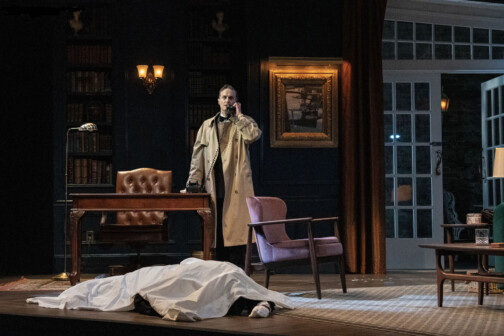
    To kick off our coverage of the best in North Texas arts and culture in 2012, we asked our theater critics which plays they thought were the best to hit local stages this year.


    2Comments Read More

  • How Two Dallas Boys Moved to Los Angeles and Made a Movie the Hard Way

    Author:
    By
    Post date:
    December 6th, 2012 8:39am

    Dallas natives Barry Wernick and Matthew Spradlin’s Bad Kids Go To Hell opens in theaters this Friday.This is the story of the film’s unlikely journey to the screen.


      Read More

  • Enter FrontRow Live’s VJ Concert and Help Us Capture the Event

    Author:
    By
    Post date:
    October 17th, 2011 10:02am

    FrontRow Live will take place on November at the Dallas Contemporary, and even though you were already planning on being there, you can also enter a chance to win the opportunity to VJ the event. That’s right, we’ll have a camera crew combing the floor and you can be the personality in front of the camera. All you need to do to enter is go to our FrontRow Live page and click on the “enter contest” button at the top of the page. Good luck!


      Read More

  • A Response to the Responses: Creative Time

    Author:
    By
    Post date:
    February 15th, 2011 12:40pm

    In reading the responses to the Creative Time SMU Meadows report, we thought it would be helpful to add some context and clarity by defining our process during our Meadows residency over the past year. Creative Time may be best known for producing public art projects in New York City, but we also produce projects across the nation and now globally.  In addition to our projects, we have an advisory service that has worked with various cities around the country to develop civic art programs and master plans. When we were awarded the Meadow’s prize, it was suggested that we research the Dallas art community.  Given recent conversations and debate around the health of the Dallas art scene, we thought this would be a great time to participate and contribute to the artistic advancement of this city.

    (more…)


    3Comments Read More

  • Reaction to the Report: Artist and UTA Gallery Director Benito Huerta

    Author:
    By
    Post date:
    February 9th, 2011 12:43pm

    My thoughts on the SMU Meadows Prize Report is that most of what the report addresses is on target.  I do think there is a lack of non-profit artist spaces but that the numerous university galleries take up that slack; though in an ideal world there would be plenty of both.  The collectors are here and the artists are here but it would be, again, ideal if the collectors here were collecting more local and regional art. After all, many of the artists who have created the art now have national reputations. This is not to say that the collectors should stop buying national and international artists at all. The Metroplex is one of the richest museum repositories of art in the nation but do they reflect the richness of the regional art scene? Art criticism is the most difficult because the major newspapers are relegating arts writing to human interest and not criticism. Yet, they have movie reviews, why not art reviews? The readers could demand that the newspapers return to having a more extensive arts coverage. Thank goodness for A+C, Art Lies and Glasstire; but then again, there could be more.

    One area that did not get addressed is the diversity of the art community. I feel that there could be more diversity not in the artist ranks, because it already is diverse, but in other facets of the community. Look at the roster of artists in commercial galleries, the curators of the museums, the university gallery directors. Not much diversity there. And as for collectors – what they collect usually reflects what they see in any of those categories.  The Museum of Fine Arts in Houston has an African American Collectors Circle. They also have a Latin American curator (thought Latino, Chicano and Mexican American art is not her focus – and yet those categories I just mentioned are all American art). This is a big problem, and here it is the 21st century.

    There are two factors that work against the Metroplex having a more cohesive art scene. One is geographical. Because the Metroplex is just that — a cluster of cities small, medium and large — it makes it physically difficult for that daily interweaving of artists from each of those communities. And speaking of interweaving, there could be more of a woven community between artists, gallerists, curators and collectors. The museums and non-profit artist spaces could be the conduit for such gatherings. The Rachofsky House does an artist night there, but imagine an art night like a museum mixer where all of those factions come together. Perhaps there ideas could get formulated, discussed, exchanged and later, even, realized.  This would make for an even more exciting art scene in the Metroplex.


      Read More

  • Reaction to the Report: Jeremy Strick, Director of the Nasher Sculpture Center

    Author:
    By
    Post date:
    February 8th, 2011 11:43am

    I was interested to read the Creative Time report, and to follow the response. At one level, the report is inarguable. You can’t take issue with any of its recommendations. At another level, the report’s approach is highly particular, even pointed. It suggests that transformation will follow less from a great new project, a bold new vision, a new or restructured institution, or even the focused application of resources. Rather, we’ll attain the goal of a thriving artistic community through the progressive accretion of simple, obvious, positive behaviors. If we can, each of us—administrators, artists, collectors, gallerists, journalists, trustees, educators—be better arts citizens, then our arts community will thrive.

    To a city that’s just witnessed the completion of dazzling new cultural edifices and the assembly of extraordinary art collections, the Creative Time approach might appear prosaic. Instead of the excitement of a grand vision, Creative Time offers a series of modest steps. Rather than the satisfaction of reading what other people should do, and how they should spend their money, we’re told to do it ourselves. And while it might be fun to see fingers pointed (not at ourselves), what’s fun about being told to cook dinner?

      (more…)


    3Comments Read More

  • Reaction to the Report: Terri Thornton, Artist and Curator of Education at the Modern Art Museum of Fort Worth

    Author:
    By
    Post date:
    February 7th, 2011 10:49am

    I’m trying to put myself in the shoes of Creative Time, considering “what” and “how” I would present to a city’s art community that seems to be looking for a road map to success but didn’t fully ask for my help. Many voiced the observation that the report is vague and too polite. I guess the report could have revealed more of the dirt learned in private conversations and called it as the reporters inevitably saw it, leaving Dallas to confront and fight out the resentment it has been harboring. While I know this report addresses the need for concrete things like a real art writer for the Dallas Morning News and collectors looking for art at home as well as from “art centers” elsewhere, I think many of the reactions to the report are actually reactions/responses to each other and ourselves. But I do agree with Christina Rees and others that the report should have been more rigorous, as well as with Ben Lima that the advice should have and could have been specific to the region. Which brings me to another point; Dallas can only realize its potential by recognizing that it isn’t an island but rather part of a metroplex. Businesses and families may have reasons to draw the city limits with a permanent marker and fuel rivalries but the art community doesn’t. There is no competition. The drive from Dallas to Fort Worth and Fort Worth to Denton, etc is not overwhelming and completely worth it to strengthen the community as a whole or just to take advantage of some incredible opportunities. After driving to Fort Worth to see an exhibition or for a lecture, artists and the like should organize dinner or drinks at one of the restaurants or bars within walking distance of the museums or within a 7 min. drive. Discussions over food and drink following something stimulating like a lecture or seeing art are where ideas form and plans are hammered out. Denton and Arlington have the same to offer. Some of you know I’m right because it’s what you do. Such conversations have been organized for us but we need to make it a personal practice. There shouldn’t always have to be an agenda. It’s what I do when I go to Dallas and I consider myself fortunate to have the opportunity. I also think there’s a need to spend more time actually looking at and thinking about art for our personal well being. We don’t have anything to talk about or present to the world if we don’t stay engaged with art which is what supposedly brought us to this report and its responses.

    We have to individually be clear about what we want and why we want it. Making communities should be organic but sometimes we just can’t wait so we need to proceed knowing that anything forced is going to be messy.


    1Comment Read More

  • Reaction to the Report: Artist Frances Bagley

    Author:
    By
    Post date:
    February 7th, 2011 10:46am

    The interviews and get togethers that Creative Time coordinated during their visits to Dallas this last year were energizing and cathartic for those of us who participated.  It was good to have an organization with the significance of Creative Time express interest in our community. The report resulting from their investigation, which was recently released, does a very accurate job of explaining exactly what was said to them. They were definitely listening. I think, however,  that many of us were hoping they would translate one of their recommendations for the Dallas Art Community  into a defined project, giving us a more solid example of how we might move forward.

      Read More

  • Reaction to the Report: Arts Advocate Douglas Martin

    Author:
    By
    Post date:
    February 3rd, 2011 12:08pm

    I read the Front Row article and then the Report, complimented Noah, and then referred him to a new movie I just watched called Cool School about Walter Hopps, Irving Blum, Dennis Hopper and some other ambitious artists who created Los Angeles’ modern art scene from scratch back in the 1950′s.  The Report mirrors several key elements in the movie’s principals’ plan and vision.

    I am neither an artist nor a scholar.  I am, however, very active in the local arts community, volunteering and sitting on committees and boards with the Dallas Museum of Art, Dallas Contemporary, KERA, KXT, TITAS, Crow Collection of Asian Art, UTD’s Artist in Residency Program: CentralTrak, and most recently, the Emergency Artist Support League (EASL).  I’m also an Ambassador to the Arts District.  I spoke at Town Hall meetings when called upon to help save the Office of Cultural Affairs.  I have a scheduled meeting with my City Councilmember next week to discuss the Public Art Program.  I attend an average of at least 20 gallery openings a month on top of attending institutional events.  I am out there.

    (more…)


    1Comment Read More

  • Reaction to the Report: Artist Laray Polk

    Author:
    By
    Post date:
    February 2nd, 2011 1:43pm

    Maybe the report is a vehicle, an annoying obstacle that makes people reflect in new ways. (Or, in the least, reflect in the unorchestrated company of one another.) Maybe our art community—The Community—is a fissile isotope that has been poked into activation by an outside force. Hopefully, a productive chain reaction will occur. And I think the potential exists if we are willing to open up. (It’s existence was there even before the report.)

    There is a certain predictability of the criticisms and compliments of the report thus far: institutional v. individual momentum, people with means v. struggling artists, galleries v. the museum/classroom without walls, and local artists v. international artists. As a practicing artist, these are all too familiar crevasses of mind that we fall into over time (and it’s not unique to Dallas-Fort Worth). And we have the antidote with us at all times, but we forget. We imagine outside forces are controlling opportunities, and withheld opportunities are making our lives hell (which is, by the way, partially true). The reality is that creative imagination waits for no one; it is an activity that does not depend on a phone call, commission or favorable critique in the MSM to make experimentation and innovation happen (though it is certainly true those things can help pay for electricity or a dental bill which makes a studio space and one’s mouth a little less sufferable). The bottom line is that when many economies become intertwined in the business of making art, art making becomes a business of selling art (“art expertise,” catalogues, Tutty Bears and any number of ancillary items).

    If the report points out anything we think we didn’t already know, it is that we live in a geography of vastness combined with very peculiar proxemics.That is what outsiders can bring to the equation that we can’t see even though it is right in front of us. We are socially challenged because of the peculiar proxemics (or vice versa). It is not for one individual, nor an outside collective, to say what all that involves. It would, though, make for an interesting discussion out in the open without declared moderators or institutional guidance or even an agenda of any kind. It is worth contemplating why the report angers us or makes us think that the ideas contained within it are going to change things for the better.


      Read More