
The idea of Dallas as a literary hotbed is a hard sell. No one knows that better than George Getschow, journalist, writer, University of North Texas professor, and architect of UNT’s Mayborn Conference. The Mayborn is a seminar and workshop dedicated to the art of literary nonfiction, and in the seven years since it launched, it has quietly drawn some of the nation’s leading luminaries, including Paul Theroux, Susan Orlean, and Gay Talese, to a nondescript hotel in Grapevine.
The Hilton DFW Lakes Executive Conference Center is not exactly Hemingway’s “movable feast,” and a conference dedicated to literary nonfiction—a genre that includes everything from personal essays to reported narratives and pop histories—is not the sexiest brand of publishing. When Getschow asked Ira Glass, the host of the nationally syndicated radio show This American Life, to come to the conference in 2008, it took Glass a long time to respond to Getschow’s email. When Glass finally agreed to the 2009 conference, he said he had grave reservations about the value of literary conferences in general. Even when Getschow asked his own friend to come, National Book Award winner Bob Shacochis, the author of Swimming in the Volcano responded: “That’s a wasteland. Why would I come to Dallas in the middle of July?”
The answer, surprisingly, is not a big fat speaker’s fee. The Mayborn was originally funded by the Frank W. Mayborn Graduate Institute of Journalism and now relies primarily on corporate and foundation sponsorships. Oftentimes, Getschow explains, speakers are paid less than what they might normally make for their appearances (if they’re paid at all). What gets them to Dallas is the unique combination of Getschow’s wide web of personal literary connections and the Mayborn’s growing reputation for being a uniquely intimate literary meeting ground (only about 350 people attend). And with each year, the Mayborn is growing not in size but in its reputation for producing new literary starlets.
Take the case of Susannah Charleson. The writer was a literary nobody when she first submitted her story to the conference’s book manuscript competition in 2007. Charleson’s work not only took second place, but later that year she signed a book deal with Houghton Miffl in Harcourt. Then there’s former Green Beret Tony Schwalm, who had never published a single word before he submitted an essay to the Mayborn about his experience in boot camp. Schwalm’s essay took first place, and, soon, the writer had a deal with Simon & Schuster.
“Texas is feral ground for storytelling,” Getschow says. “To publishers in New York, it is almost like another country.” Now those publishers are starting to take notice. And so are agents. “I was in New York a few weeks ago talking with book publishers. They’re talking about the writers Hornfischer found here, and they are all trying to figure out how he did it.”
Jim Hornfischer is the literary agent who signed both Charleson and Schwalm, as well as former Dallas Morning News writer Bill Marvel, to book deals. The Mayborn is a literary event he won’t miss.
“The whole thing is very fresh,” Hornfischer says. “Most of these things are typically fiction-centric or mass market events. Here, most of the people attending are also practicing in some fashion.”
Hornfischer says the format of the conference is very collegial, with all participants taking part in the sessions, hearing the same stories and speakers. And the conversation doesn’t stop when the sessions end. “The hotel bar is buzzing,” Hornfischer says. “Outside of New York, I have never known a room fi lled with writers to buzz like that.”
At literary conferences, Getschow says, there is often a hierarchy of writers. “We try to invite people in who are friends or friends of friends,” he says. “We have some pressure to expand, but I really resist that. I want to keep it intimate.”
That intimacy fuels the potency of the Mayborn as a literary event, which in turn helps shift the perception about Dallas. “The Mayborn is the most compelling, remarkable writers’ conference I’ve attended in more than 20 years of writers’ conferences around the nation,”
Shacochis wrote after finally attending. “Thanks to the Mayborn tribe of storytellers, I think of Dallas as a preferred destination, a center of literary gravity, perhaps the very heart of the universe these days for nonfiction writers in America.”
Needless to say, this kind of praise has attracted the attention of literary circles around the country, and Getschow says some are trying to lure the conference away from Dallas. “There’s been a great deal of chatter in the literary community in Santa Fe who would like to see the conference there one year,” he says. “But it is a bit risky. Getting to Santa Fe is not easy.”
Ironically, though some local conference supporters would like to see the Mayborn move to a more interesting location, perhaps UNT’s campus or somewhere closer to Dallas, what gives the nondescript conference center in Grapevine an edge are the same qualities that attract any kind of convention to Dallas: it’s easy to get there from the rest of the country. And as long as the Mayborn stays local, it will continue to erode misconceptions about Dallas’ literary life.
“When people come here, they get a completely different perspective than their fi rst impression,” Getschow says. “And they meet writers from Texas who are doing really good work.”
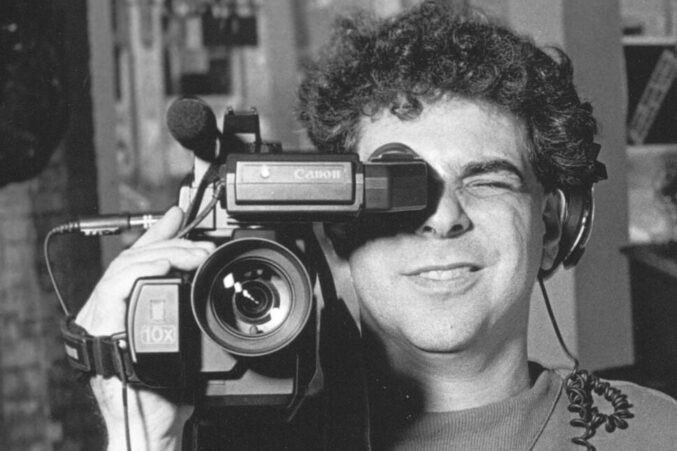
Image: Diane Ackerman, GeneWeingarten (front), and Ted Conover are this year’s speakers,the latest impressive“gets” for the Mayborn Conference.

1 comment
I agree on every account; the Mayborn is just a special experience that will really impact writers at any stage in their career.