
Cutting Public Funding to the Arts, a Proven Economic Engine, Just Doesn’t Make Sense

Author:
By
Post date:
July 1st, 2010 10:53am

When deficits loom and budget cuts are in order, the arts are often among the first on the chopping block. With today’s economic climate, the outlook for local arts organizations is bleak. Last year more than 5.5 million people attended almost 50,000 city funded arts and culture events in our city, according to the City of Dallas Office of Cultural Affairs. However, budget cuts combined with individuals taking longer to pay pledges or donors who cut back on contributions, create deficits that can’t be made up through attendance alone. In 2009, funding for all cultural programs was cut by 34 percent. This year, the draft city budget proposes an additional 55 percent be cut. Quality is often being compromised and some organizations simply can’t survive.

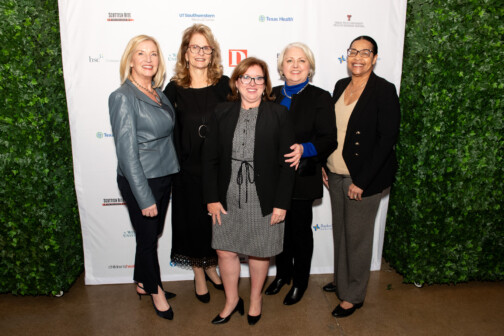
“City funding is the backbone to many Dallas cultural groups, said TITAS director Charles Santos at a “Dallas Area Cultural Advocacy” meeting on June 30 held at the Sammon Arts Center. “The loss of this funding will not only devastatingly impact these groups, but it also sends an unfortunate message our city doesn’t value the importance and impact of the arts. “

Classical treasures such as dance concerts, theater productions, and visual arts draw an educated work force, thus, providing Dallas with a crucial professional base. The cultural offerings in Dallas have attracted corporate re-locations such as AT&T and Tenet Healthcare, resulting in job creation and an expanding economy.

Moreover, Dallas has the largest arts district in the U.S, and Dallas was recently voted number five in a list of top U.S. art cities according to a travel website. Just last October, “Spotlight Sunday” – the Grand Opening of the AT&T Performing Arts Center – drew over 45,000 people. It would be a terrible shame to see our beloved arts organizations begin to diminish just as the district, complete with three beautiful new performance spaces, is inaugurated. Without performing companies, these buildings are useless.

We all benefit from cultural experiences, and our City Counsel representatives need to hear from all of us. We must transform the current debate in these City Counsel meetings from “how much do we cut arts funding this year” to “how much do we still need to invest in the arts.” According to a study by Southern Methodist University economist Ray Perryman, for every dollar invested in the arts in Texas, more than $298 of cultural impact on the economy occurs.

“To only view the arts as entertainment is to miss the most important value the arts bring to a city, the powerful economic engine the arts generate,” Santos said. “Why would we cut the legs of an industry that has repeatedly proved itself across the country to be a valuable economic engine?”

In August, the City Counsel will meet to decide our FY 2010-11 budget. Call your district counsel representative or write them a personal letter. Remind them that art enables people to communicate cross-culturally and cross-generationally. Culture and quality of life services are an integral thread within the fabric of our great city.


5 comments

  1. What does “$298 of cultural impact” mean?

    I think the arts are first to be cut because the unionized civil employees will not be touched.

    What arts organizations are in danger? The Meyerson runs on a profit, doesn’t it? I think there is a difference between the Winspear and some visual arts artist getting a grant. The grants can go, in my opinion. I’d prioritize the Dallas Children’s Theatre, etc., not some artist in their loft with grants.

    Collin County is trying to build a new 2,100-seat venue called the Arts of Collin County. This theatre will lose $1.5 million per year, according to them. That will have to be picked up by the tax payers.

    Richardson tax payers spent about $1 million last year on the Eisemann Center.

    It’s a fallacy that this theatre will be a NET profit. For the cities to get $1.5 million in sales tax revenue generated by that theatre, that means that every patron who sees a show will need to spend around $476 each per night on local restaurants, and that assumes they wouldn’t be going to a restaurant if not for that theatre. That’s the flaw with this logic – people have a finite amount of entertainment dollars and if they don’t spend it on A they will spend it on B.

    The city gets a penny per dollar spent in sales tax revenue. The state gets 6.5 pennies. So for the city to get $1.5 million in sales tax, there will have to be $1.5 billion in purchases because of the shows. Let’s assume every single show sells out, that’s 2,100 people. Let’s say there are 150 shows per year, which is a very high number. That’s $476 per person.

    So they are a NET loss for cities. I think theaters in the suburbs doesn’t make much sense. They don’t really get noteworthy shows anyway. Richardson gets the Plano Symphony, high school acts, etc. Menopause the Musical…

    Michael Givens @ 12:21 pm on July 1, 2010
  2. Mr. Givens,

    Hit a nerve did I?

    You may be surprised to discover that most arts funding does come from private investors. Gov Arts funding is the very definition of limited government. The 1/100 of 1% of federal budget dollars that are spent on the arts should not warrant such an emotional reaction. I know it feels goods to vent, so let it out man!

    Cutting the arts budget to save our taxpayer dollars is like taking a teaspoon full of oil out of the Gulf of Mexico and claiming you are cleaning it up. That teaspoon will make a big difference to a few microscopic animals, but it means nothing in the overall scheme of things. The very same way these funds mean a lot to the small arts organizations like TITAS, Texas Ballet Theater, Theater Three, Dallas Children’s Theater, and others, while the amount is hardly impacting on the overall city budget. The only reason I see to cut the teeny-tiny little arts budget is so a few political folks can speak out from their podium and say they’ve done something about the gov spending. Perhaps, you’d believe them too.

    You did give some interesting stats in your comment. Can you source them for us: “The city gets a penny per dollar spent in sales tax revenue. The state gets 6.5 pennies.” I’m sure you noticed the sited sources in my essay. Feel free to contact SMU economist Ray Perrymann to dispute his numbers.

    You may enjoy this little nugget too: Did you know that Theater Three puts on over 300 performances a year? That’s right! Over 300 performances a year.

    I do hope I’ve managed to address your concerns. I look forward to hearing from you again in the future here at FrontRow.

    Danna Reubin

    Danna Reubin @ 7:10 pm on July 1, 2010
  3. I am always impassioned when reading about arts funding cuts, being a performing artist myself for the past 27 years. It is a head-shaking conundrum to me how city & state representatives could see the benefit from ANY perspective of cutting aid to artists or organizations that provide their own children (& adults) with experiences that have the potential to enrich lives & expand points of view across cultural, religious & geographic space.
    I can understand how some might be upset by a loss of $ in a local theatre, though its existence at all & the power it has to positively change lives & attitudes is astounding – I know because I have been in the theatre & on the stage my entire life – & have seen the positive effects on schoolchildren, public school teachers, & grown adults who thought they knew & had seen it all! The city & state spend so little to support us as artists – & we do rely heavily on private donors – that taxpayers might be happy to know how appreciative we are & how seriously we take our jobs. I didn’t spend nearly 3 decades training/performing/supporting my dance job by serving the public, & the past 2 years in school obtaining my MFA to be mindless & ignorant about my community. If the city wants to fill the glorious performance spaces it is building with equally glorious dance & theatre groups, it needs to consider the level of education & sophistication artists bring to Dallas, from all over the world. Taking support away that is hardly there to begin with will NOT be good for the city of Dallas, & will not guarantee a high quality of art. If we are to devote ourselves to the betterment & beautification of our communities, we ought to receive the space & support with which to do it, otherwise we will be summoned to perform jobs that have nothing to do with putting a smile on a child’s face. :-)
    We are smart, multi-talented, extremely passionate people with an inherent need to make a difference, or at least shine some new light on a not so new subject….. We are driven to “create” – or BELIEVE ME, wouldn’t we have become accountants!!??

    Leslie Hale @ 10:23 am on July 2, 2010
  4. Danna – Thank you so much for the post. More and more people are beginning to understand the economic impact of the arts on communities large and small. You articulated some of the key metrics for the OCA, however, I would also like to point out that for the city’s $14.2 million investment in the arts, that resulted in an estimated spending by those organizations of $123.3 million dollars – a true public private partnership.

    @Mr. Givens makes a point about the economics of ticket sales. Ticket sales and city grants are only a few of the revenue sources of arts organization – other sources may include memberships, foundation grants, state grants, federal grants, individual donations, earned income, endowment and corporate sponsorships. No arts organization relies solely on ticket sales for its revenue stream.

    Last year as Congress added $50 million in arts funding to the economic stimulus package, discussions turned testy. William Ivey, former Chair of the NEA, said he was troubled by comments suggesting “that an arts worker is not a real worker, and that a carpenter who pounds nails framing a set for an opera company is a less-real carpenter than one who pounds nails framing a house.” Carpenters, actors, musicians, lighting technicians and administrators at arts organizations pay taxes, buy houses, shop in stores and send their kids to college just like other worker. They are part of the real economy.

    And, while the arts are commerce, they also revitalize cities not just through their bottom-line but through their social role. Through the work of the Knight Foundation and their efforts to measure vitality they have observed that “the arts build ties that bind—neighbor-to-neighbor and community-to-community. It is these social networks that translate cultural vitality into economic dynamism.”

    Veletta Forsythe Lill @ 12:05 pm on July 2, 2010
  5. What’s especially egregious about the City of Dallas budget for the Arts (as now proposed) is that the heaviest cuts are targeted to the most vulnerable(and valuable) sector of support: programming. Programming grants underwrite performances that serve the citizens of Dallas and our visitors. (Most city money goes into supporting building operations, not in support of artists’ work.)

    Cutting performances means artists jobs’ (almost all underpaid to start with!) will be further decimated, especially in the mid-range and smaller organizations that so effectively penetrate all levels of society and, for that matter, all councilpersons’ districts.

    Similarly poor budgeting processes in Seattle (a city we once envied for its healthy Arts ecology) has led actors, designers, musicians and directors to leave Seattle, thus causing that city to be bereft of its once exemplary talent pool. Scott Warrender, recently in Dallas for the world premiere of his musical at Theatre Three, reports that numerous arts teachers, who combined their teaching and performing to make a living, have abandoned Seattle and small or even mid-range performing organizations have vanished in the squeeze.

    Arts organizations are more practical than most people might guess. All arts leaders I know to expect cuts in this difficult economy. We know we’re required to find even more efficiencies. Frankly, we expect it of other agencies funded wholly (or partially as the arts are) by the city.

    Finally, we believe the members of the City Council can and will seek to be more fair AND CONSIDERED as they look at the economic importance of the arts in Dallas and along with the City Manager find ways to balance the budget without wiping out decades of work by dedicated Dallasites working to provide meaningful arts and arts education to the city.

    JAC ALDER, Theatre Three

    Jac Alder @ 3:26 pm on July 2, 2010

Comment

* required fields