When A Couple of Yokels Bicker About Civic Cultural Supremacy, We All Lose the Argument

Author:
By
Post date:
March 4th, 2010 5:42pm

Wasn’t it just a week ago Christina Rees appeared on PRI’s Marketplace to talk about the show she co-curated in a former Washington Mutual Bank, making us all look pretty smart and un-provincial in the process? One thing that was thrilling about the segment is that at no point did the conversation degrade into the kitsch, schmaltz images that the rest of the nation conjures when talking about North Texas – “Big D,” “Cow Town,” “Wild West,” “Oil boom” – that paint our cultural contributions as products of a collection of vain oil barons blowing their money on fancy pictures and the “Ah-pra.”

It was exactly a week after Rees’ intellectual pirouette across a national media stage that Wayne Goodwyn and John Burnett offered up their embarrassment of a story, “Dallas, Fort Worth Battle For Cultural Supremacy,” on NPR’s All Things Considered. The piece, which you can listen to here, is mostly a benign, unbearably corny faux-fight between Goodwyn and Burnett over which North Texas city has better “arts.” Highlights include the Turtle Creek Chorale director Dr. Jonathan Palant blabbering about how everything is bigger in Texas; former Fort Worth City Manager Doug Harman whiffing cow dung outside the Kimbell: and theater-goer Jean Coleman giggling about how cool it is that Dallas Theater Center audiences can’t go straight from the parking garage to the lobby at the shinny new Wyly Theater. NPR’s Robert Smith entered the end of the segment to flaunt New York’s cultural prominence (as if anyone ever questions it or cares), calling the Dallas / Fort Worth squabble “quaint.”

He’s right, in the context of the Goodwyn-Burnett report, “quaint” was actually a rather polite description of our cultural scene. Provincial, vain, self-flattering, indulgent, po-dunk, dung-stinking-hick-town was a little closer to my takeaway from the piece.

Now some of you may chime in here and argue that I’m taking all of this too seriously. It was a joke, a little nerdy NPR humor. Maybe you could argue that it portrayed a maturity in being able to laugh at ourselves and our stereotypes. You could even grope for a silver lining and say that the discerning local listener got an uncomfortable reminder that the more we talk about the arts district, the more it sounds like we’re trying to win a big stick contest no one else is competing in.

But the problem with the piece wasn’t merely the national embarrassment. It was the resurgence of a perception of civic rivalry that doesn’t actually exist. Let me put this as simply as possible: there is no real rivalry between Dallas and Fort Worth. Sure, wit-less subjects of an investigative put-up claim there is (hell, what would you say if a reporter stuck a mic in your face and asked?). Sure, some cling to the idea, and stick up their noses at Dallas – or Fort Worth – or both. Sure, the rivalry exists as an occasional bar room wisecrack. But the reality is that in the context of how this region’s cultural eco-system actually functions, the idea of a rivalry is asinine and out of touch.

Let me put it this way, and with all do respect to our civic and cultural forefathers, did Goodwyn or Burnett speak to anyone under the age of, oh, 55? Let’s look at the piece again. Did Palant say anything about Fort Worth? Nope, just that everything is better in Dallas, in a nervous tone that sounded like he was put on the spot. Did Kimbell Art Museum Director Eric Lee talk about Dallas or Fort Worth? Nope. He said a bunch of stuff about Michelangelo. Who in the piece did speak directly to a rivalry? Ruth Carter-Stevenson, the 87-year-old daughter of Amon Carter. Ms. Carter-Stevenson has given more to this area than most of us ever will. But the fact is her perception of our cities’ relationships is rooted in the past.

Here’s how things actually are: Fort Worth-based artists help run Dallas’ 500x gallery. Actors who star in shows at the Dallas Theater Center show up in productions at Fort Worth’s Stage West. Bands that gig in Denton also book shows in Fort Worth and Dallas. Audiences tired of the Dallas Opera’s conservatism look forward to the Fort Worth Opera Festival. The Fort Worth Modern thinks they are bigger and better than the museums in Dallas, but that has to do with the fact that they are, rather than its location in Fort Worth (and they would not deny that the when the Rachofsky and Hoffman collections show up at the DMA, this region gets a lot more interesting).

In short, we only need to listen to what our business and economic boosters keep saying: this is a region, and its significance to the nation and the world rests in its regionalism. It is no different in the arts. Despite the marketing of the new arts district, no single city in this area can claim to be world class. But taken as a whole – Fort Worth mixed with Dallas mixed with everything else – and we have a shot.

And that brings us back to Goodwyn and Burnett’s report. Both Dallas and Fort Worth share one key thing in common: they are a whole lot of something built up from a bunch of nothing. One was a crossroads on the cattle trade; the other a crossroads of the railroad trade, therefore a merchant city. Both are oil boom towns. But ultimately we are the descendents (if not genetically, spiritually) of prairie tamers. Prairie taming is not easy. It takes years of building up farms and markets, infrastructure and networks. At the root of that effort is hope. Nothing crushes hope more than the perception that all your effort is having no effect. That’s what Goodwyn and Burnett told us in their story: we may be making strides, but don’t worry, we’re still a community of slack-jawed consumers of cultural objects. For that the Goodwyn/Burnett duo should probably apologize to everyone who busts their ass in this city to overcome provincialism.

But there’s a problem: if provincialism is not our story anymore, then Goodwyn-Burnett have nothing to report on NPR. That’s exactly right. Move along. There is no story here. Yet.

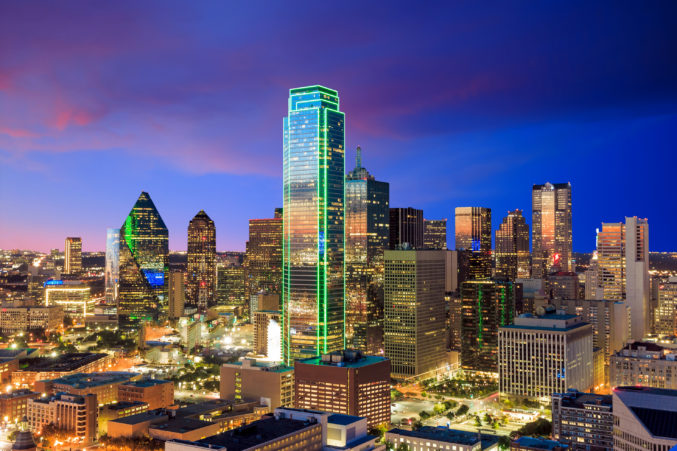
Image: drumguy8800 via WikiCommons


4 comments

  1. VERY well-said.

    Wendy @ 8:29 am on March 5, 2010
  2. I thought the NPR piece tacky and, franky, unprofessional, for the reasons cited, and more. The final snooty, “from NYC, where we have REAL culture” tag was offensive and inappropriate. Having heard the New York Philharmonic last night play no better than, and sometimes worse than, the Dallas and Fort Worth symphonies, in a hideous hall not half as good as either the Meyerson or Bass Hall, I think we DFW-ers needn’t feel inferior.

    Scott Cantrell @ 9:56 am on March 5, 2010
  3. Thanks for saying this. The piece was truly cringe-worthy.

    niceguytx @ 11:01 am on March 5, 2010
  4. Great points. Whether you put Dallas or Fort Worth before the hyphen, we share a cultural community. Shoot, today’s issue of The Dallas Morning News even opened a feature on best spring events with a great vanity shot of MAIN ST. Fort Worth Arts Festival, and Dallas families have stopped me on the street to say how much they love the event. No passport is required to cross the county line, and art lovers do so with ease and pleasure.

    Diane Wolfe @ 4:16 pm on March 5, 2010

Comment

* required fields